 By
By 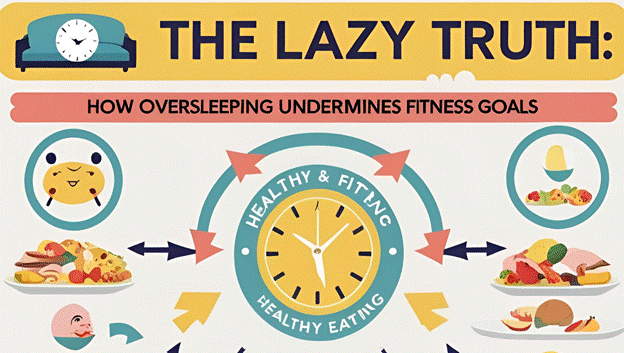
We’ve all been there — wrapped in a burrito of blankets, hitting snooze like it’s a competitive sport, and justifying it with, “Sleep is good for recovery, right?”
Well, yes… but also no. While sleep is essential for your health, too much sleep can turn your health and fitness dreams into a slow-motion nap sequence.
If you thought overtraining was your only fitness enemy, think again. Over-sleeping might be silently sabotaging your gains, your energy, and your ability to function like a regular adult.
Let’s unpack this sleepy sabotage — one funny truth at a time.
What Counts as “Too Much” Sleep?
Short Answer: More than 9 hours of sleep on a regular basis. Yes, that includes weekends.
According to the National Sleep Foundation (2024):
- 7–9 hours is ideal for most adults.
- Consistently sleeping 10+ hours can be linked to higher risk of health problems — and no, it doesn’t make you more “well-rested,” it makes you more “sloth-adjacent.”
- If you sleep so long your dreams include plot development and character arcs, it might be time to scale back.
2. The Lazy Truth: How Oversleeping Undermines Fitness Goals
Too much sleep isn’t just harmless extra rest — it’s more like an uninvited houseguest who eats your protein powder and cancels your gym appointments.
1. Slower Metabolism
Oversleeping can decrease your basal metabolic rate (BMR).
Your body burns fewer calories — even while binge-watching documentaries about people who actually go hiking.
2. Increased Cravings
Longer sleep = erratic hunger hormones
A 2023 Harvard Medical School study showed that people who sleep over 9 hours per night were 32% more likely to crave sugary and carb-heavy foods.
3. Lower Energy (Ironically)
Ever woken up after 10 hours feeling like you were hit by a truck? That’s called sleep inertia — and it’s basically a biological hangover from too much REM..
3. But Wait — Isn’t Sleep Good for Recovery?
Absolutely… In Moderation.
Sleep helps muscle repair, hormonal regulation, and memory consolidation.
But think of it like protein powder — a scoop is great. Ten scoops? You’re asking for gastrointestinal regret.
The Recovery Trap:
- Some fitness fanatics overtrain all week and then think they can “recover” by sleeping 12 hours straight on Sunday.
What really happens:
- Circadian rhythm gets wrecked
- Monday feels like you traveled through time — badly
- You miss your 6 a.m. spin class and pretend it was “intentional active recovery”
4. What the Science Says About the Relationship Between Health and Oversleeping
According to the American Journal of Epidemiology (2023):
Individuals who get more than 9 hours of sleep every night are more likely to experience:
- Diabetes of type 2
- Condition of the heart
- Reduction in cognitive ability
- Gaining weight
- Existential dread, albeit unofficially, is a good fit.
Also in Older Adults:
- An excessive amount of sleep has been associated with an increased risk of dementia, which may be caused by impaired detoxification processes in the brain.
- Your grandma might not be indolent; perhaps her mind is simply rebelling.
5. The Main Causes of Oversleeping (Aside from “I Was Cozy”)
1 Catching Up on Sleep Debt
- With only four hours of sleep throughout the week, you attempt to “catch up” by getting fourteen hours on Sunday.
- Your body says, “I appreciate the gesture, but this is mayhem.”
2. Bad Sleep Quality
- You spend 10 hours in bed, but only four of those hours are spent in real deep sleep.
- Your 2 a.m. “one more episode” habit, snoring companions, or blue light are all to blame.
3. Anxiety or Depression
- Excessive sleep, also known as hypersomnia, can result from mental health problems.
- Instead of just getting a new pillow, it’s worthwhile to speak with a specialist if you’re always exhausted and lack drive.
6. Indicators That You May Be Oversleeping
Even after getting more than nine hours of sleep every night, you still feel exhausted.
- You consistently miss workouts because “you overslept again.”
- After sleeping longer, you get up feeling more groggy.
- Since your day starts at brunch time, you either overeat or skip meals.
- It’s time to make a change if your life is centered around naps, snacks, and saying sorry for being late because “your bed kidnapped you.”
7. How to Improve Your Sleep Without Becoming a Morning Person
Set Up a Sleep Window:
Go to bed and wake up at the same hour every day (including weekends, sorry, brunch team).
Manage your lighting:
- Get some sunshine in the morning.
- Limit screen use for an hour before bed.
- Don’t use TikTok in bed unless you’re viewing films on how to improve your sleep
Take a nap after you move first:
- Make an effort to exercise within three hours of getting up.
- A nap in the afternoon? Great! Just make sure it’s less than 30 minutes, unless you want to feel like you time-traveled when you wake up.
- There is no “Revenge Bedtime Procrastination”:
- Scrolling until 2 a.m. because you didn’t have enough “me time” is similar to drinking orange juice after brushing your teeth: it’s technically permissible, but it’s objectively unpleasant.
8. Funny (But Real) Sleep Survey Stats
2024 Sleep & Fitness Trends Report found:
- 41% of adults aged 25–40 said they oversleep more on “rest days” and then skip workouts
- 17% admitted they “pretended to meditate” but actually napped in gym yoga class
- 9% said they only go to the gym when they wake up “accidentally early” (which is code for “never”)
Final Thoughts: Sleep Smart, Not Just Long
Look, sleep is wonderful. It heals. It restores. It feels like a fluffy hug from the universe.
But like any good thing — pizza, WiFi, bicep curls — too much can backfire.
If your fitness goals matter, it’s time to treat sleep like a recovery tool, not a recreational activity. Your body wants balance — not a Netflix marathon that turns into a 14-hour nap spiral.
So the next time your alarm goes off and your bed whispers, “Just five more hours…” remember this essay, roll out of bed, and go do one push-up. Or at least blink aggressively in protest.