
Stop Bleeding Gums: Simple Steps for a Healthier Mouth and Body

►INTRODUCTION
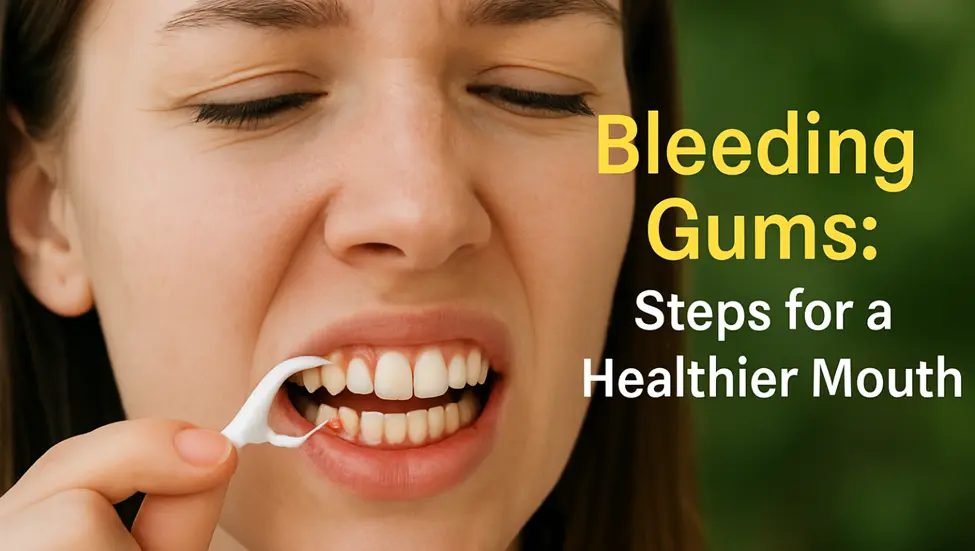
You’re cleaning your teeth, softly singing along to your favorite song, and then… there it is — a red mark on your toothbrush. Bleeding gums can be frightening, irritating, and even humiliating. However, here’s some positive news: they are often treatable with a little care (Tender Loving Care… and flossing).
Bleeding gums are not merely an issue confined to your mouth — they can reflect your overall well-being. Adopting the right habits can safeguard your teeth as well as your heart, immune system, and self-esteem.
►What Causes Gums to Bleed?
Typical Reasons
- Plaque accumulation → The primary cause that results in gingivitis.
- Aggressive brushing → Brushing as though you are cleaning a scorched pot.
- Vitamin shortages → Particularly vitamins C and K.
- Hormonal changes may occur due to pregnancy, menstruation, or menopause.
- Health issues → Diabetes, blood-related conditions.
- Smoking → Decreases blood circulation and the ability to heal.
Interesting Fact: The health of your gums and heart are connected—bacteria from gum disease can enter the blood and impact heart health.
►Survey: Gum Care Habits Snapshot
(Results from a casual poll of 120 adults)
| Question | Yes (%) | No (%) |
| I floss daily | 36 | 64 |
| My gums bleed sometimes | 55 | 45 |
| I’ve seen a dentist in the last 6 months | 48 | 52 |
| I know about the gum–heart health connection | 41 | 59 |
►Top Easy Strategies for Stopping Bleeding Gums
1. Learn the Delicate Brush Method
- Use a toothbrush with soft bristles.
- Maintain a 45° angle between it and your gums.
- Use a little circular motion instead of harsh back-and-forth scrubbing.
Professional Advice: Instead of thinking of brushing as a punishment for your gums, consider it as a form of “massaging.”
2. Floss as if you were a boss
- Plaque is removed by flossing in areas that your brush cannot access.
- Gently slide the floss between your teeth, bending it around each one.
- In a matter of days, regular flossing can help lessen gum bleeding.
- Enjoy this friendly reminder: Flossing is essentially like giving the little gaps between your teeth a spa treatment.

3. Wash with Salt Water
- Salt water kills germs and lowers inflammation.
- Warm water should be mixed with ½ tsp of salt, rinsed for 30 seconds, and then spit out.
- For respite, do it twice daily.
4. Improve Your Vitamin Skills
- Oranges, guava, strawberries, and bell peppers are all sources of vitamin C.
- Leafy greens, broccoli, and cabbage are all sources of vitamin K.
- Think about using a supplement if your diet is deficient.
5. Give Up Smoking
- Smoking exacerbates gum disease and slows healing.
- In a matter of weeks, stopping smoking can improve the condition of your gums.
6. Maintain hydration
- Water helps maintain healthy saliva levels by washing away germs.
- Acids are neutralized by saliva, which provides organic defense for the gums.
7. Pick foods that are gum-friendly.
- Choose hard fruits and vegetables like apples, carrots, and celery, as they naturally clean teeth.
- Stay away from sugary drinks and candies that nourish harmful bacteria.
8. Make regular trips to the dentist
- Persistent tartar is removed by professional cleaning.
- Early detection of gum disease protects teeth and saves money.
►Home Treatments for Healthy, Happy Gums
Gel made of aloe vera
- Anti-inflammatory by nature.
- Apply gel directly to gums and leave for a few minutes before rinsing.
Paste of Turmeric
- Soothing and antibacterial.
- Gently massage the turmeric powder and water mixture into the gums.
Oil of clove
- Antimicrobial and pain reliever.
- For fast relief, apply a small amount of clove oil to the affected area.

Lifestyle Tweaks for Long-Term Gum Health
- A daily care checklist
- Use soft bristles to brush twice daily.
- Every day, floss your teeth.
- Mouthwash with no alcohol should be used.
- Eat a well-balanced diet.
- Regular dental examinations are necessary.
- Smile More, Stress Less
- Stress has an impact on healing and immunity.
- You might try singing in the shower, walking, or yoga.
►The Myth-Busting Corner
- MYTH: “Bleeding gums indicate you’re brushing too much,”
Truth: It generally indicates that you’re not brushing or flossing properly.
- MYTH: “Stop flossing if gums bleed,”
Truth: Continueflossing gently; bleeding will lessen as your gums recover.
- MYTH: “Only old people get gum disease”
Truth : Anybody, even teenagers, can be impacted by it.
►When to Get Expert Assistance
Call your dentist if:
- Despite excellent oral hygiene, bleeding continues for over a week.
- Gum swelling, pain, or pus are all signs.
- The sensation that teeth are loose or moving.
- Your breath is consistently unpleasant.
►The Importance of Your Gums in Addition to Your Smile
Good gums:
- Lower your risk of having a stroke and heart disease.
- Maintain a healthy digestive system.
- Increase your self-assurance when interacting with others.
►Quick Motivation Booster
Consider your gums to be the base of your smile. Why put your teeth in danger on unhealthy gums when you wouldn’t construct a dream home on flimsy foundations?
Looking after your gums now entails:
- Better breath.
- A self-assured smile.
- Improved general health.
►Conclusion: Life objectives are gum goals.
There is no need for bleeding gums to become your “new normal.” You may have a healthier mouth and a healthier you with routine expert care, a dash of natural treatments, and modest daily adjustments.
Therefore, when you grab your toothbrush tomorrow morning, keep in mind that you are taking care of your entire body, not just cleaning your teeth. That’s something to grin about!