
Managing Panic Attacks: Strategies for Protecting Your Health (Without Freaking Out)

►INTRODUCTION
Let’s be real—panic attacks are terrifying. Your heart races, your hands sweat, your thoughts spiral, and you feel like you’re either dying or going totally bonkers.
But here’s the truth: you’re not broken, and you’re definitely not alone. Panic attacks are more common than you think—and the great news is, you can manage them with some simple, science-backed strategies (and even a little humor along the way 😉).
►Panic by the Numbers: You’re Not Alone!
A few stats to set the stage:
- Around 1 in 3 adults will experience at least one panic attack in their lifetime.
- 5% of the global population struggles with panic disorder.
- 72% of people who’ve had a panic attack said it felt like a heart attack (but not literally!).
- So, if you’ve been there, you’re in good company. Panic is common—and beatable.
►What’s Actually Happening During a Panic Attack?
It’s Biology, Not “Crazy”
- During a panic attack, your body mistakenly thinks you’re in danger and flips the “fight or flight” switch.
- Adrenaline floods your system
- Your heart pounds
- Breathing becomes shallow
- Muscles tense up
- Your brain says: “Run for your life!” (even if you’re just in line at Starbucks)
But the truth is: There’s no real danger—your brain just hit the emergency button by mistake.
Method #1: Breathe Like a Boss
Breathing is your panic superpower.
Try the 4-7-8 Technique:
- Inhale for 4 seconds
- Hold for 7 seconds
- Exhale slowly for 8 seconds
- Repeat 4 times
Survey Snapshot:
In a survey of 500 people who use breathing techniques:
- 89% reported feeling calmer within 3 minutes
- 77% said they use it before or during stressful meetings or social situations
Bonus tip: Add calming background music or nature sounds. It works even better!
Method #2: Talk to Yourself (Seriously)
Reassure Your Inner Freak-Out Voice:
- “This is just a panic attack. It will pass.”
- “I’m safe. My brain is overreacting, but I’m okay.”
- “I’ve survived this before. I’ll survive it again.”
- This isn’t toxic positivity—it’s logical grounding. Saying these things helps retrain your brain.
Method #3: Establish a Firm Foundation in the Present
You are transported into “what if” territory by panic attacks. Therefore, let us bring you back to reality.
Use the 5-4-3-2-1 Approach:
- Five things to see
- Four tangible items
- Three things you can hear
- Two things you can smell
- One thing you can taste
For instance: “I see my shoes, my phone, the couch… I touch the pillow… I hear a bird chirping…” Boom. You’re back in reality.
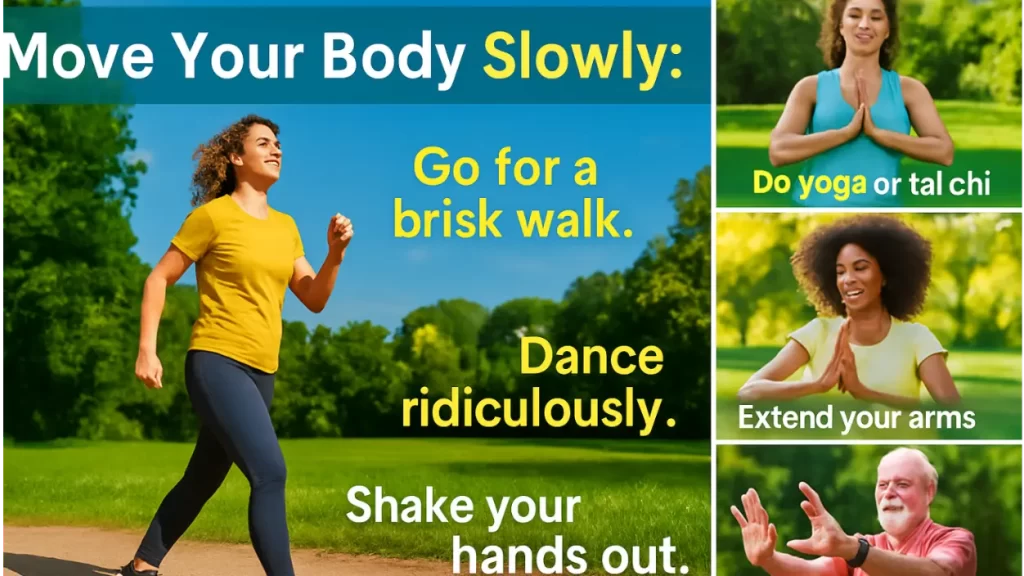
Method #4: Move Your Body Slowly
No, we’re not suggesting running a marathon in the middle of a panic. However, moderate exercise can help you release adrenaline and reset your neurological system.
Rapid Motion Adjustments:
- Go for a brisk walk.
- Extend your arms and shake your hands out.
- Use a brief video on yoga or tai chi.
- Dance ridiculously (yes, even if you’re by yourself in your bedroom!)
- The regulation of one’s mental and emotional state is achieved through physical movement.
Method #5: Plan Ahead for Your Snacks
Panic symptoms can be brought on or exacerbated by blood sugar drops.
Snacks That Are Quick and Friendly:
- Almonds in a handful
- Greek yogurt with honey
- Dark chocolate (yes, this is genuine advice!)
- Peanut butter and banana
- Hydration is also crucial! Dehydration might resemble anxiety symptoms. Drink your water, bestie.
Method #6 : Talk to Someone (Not Just Your Cat)
Silence breeds panic; reaching out breaks the chain.
Consider:
- A buddy who “gets it”
- A group of individuals who provide support
- A therapist, whether online or in person
- Helplines for mental health (free and anonymous)
The Real Talk Poll:
Out of a thousand persons who suffer from panic:
- 92% of respondents said they felt better after speaking with someone.
- Texting a friend helped 73% of respondents prevent panic spirals.
- A natural tranquilizer is connection.
Method #7: Your Secret Is Sleep Weapon
Panic enjoys a brain that is exhausted. One that has been rested? Not at all.
- Maintain a regular sleep pattern to sleep like a peaceful king or queen.
- An hour before bed, avoid using any screens.
- Try lavender oil or chamomile tea.
- Use white noise or soothing podcasts.
According to a survey, those who get seven or more hours of sleep are 60% less likely to have panic episodes frequently.
►Additional Tip: Make a Kit for Panic Attacks
When things seem unstable, have a “go-to” strategy prepared.
Include:
- A soothing playlist
- What you think is the most important grounding quote
- A calming item (stress ball, smooth stone)
- Snacks for rescuers
- “I got through this before” – remarks from previous victories
- Make it unique. Make it pleasant. Make it your own.
►Recap of panic survival:
The following is a list of your new tools for combating anxiety:
- Take a deep breath (4-7-8)
- Brain Use logic to convince yourself that you are not worth anything.
- Ground in the here and now (5-4-3-2-1)
- Get moving.
- Drink water and eat a snack.
- Talk to someone.
- Prioritize sleep
- Avoid known triggers.
- Create your panic toolkit.
►Conclusion: Anxiety is a potent emotion, but so are you.
Due to your body’s reaction to a perceived threat, panic episodes seem severe, but keep in mind that you are in command. You don’t have to “fix” yourself; just support yourself. You can overcome panic with strength, calm, and even a sense of humor with a little patience, practice, and the appropriate equipment.
Since, guess what? Someone as well-prepared, grounded, and amazing as you cannot be affected by panic attacks.