Effective Strategies for Treating Fibroids: A Comprehensive Guide

►INTRODUCTION
If your uterus were to have a list of guests, fibroids would certainly be the unexpected intruders. They arrive uninvited, settle in, and often bring along discomfort, inflammation, and excessive bleeding. Not very pleasant, right? However, don’t fret—while fibroids are quite prevalent, they don’t have to dominate your life. With a blend of lifestyle changes, medical solutions, and a sprinkle of humor, you can send these unexpected visitors packing.
►Fibroids : What Are They, Anyway?
Definition: Fibroids are growths in the uterus that are not cancerous.
Prevalence: The National Institutes of Health (2023) notes that around 70–80% of women will experience fibroids by the time they reach 50 years old.
Symptoms:
- Heavy or extended menstrual bleeding
- Pressure or pain in the pelvic area
- Increased urge to urinate (due to fibroids pressing on the bladder)
- Constipation issues
- Abdominal swelling or bloating
Fun Fact: Not all fibroids cause noticeable symptoms; some are quiet inhabitants.
►How Do You Know if You Have Fibroids?
- Ultrasound: Similar to a pregnancy scan, but it focuses on identifying fibroids.
- MRI: The top-tier imaging tool—provides clear and detailed images.
- Pelvic Exam: A doctor may detect an unusually large or irregular uterus.
Survey (CDC, 2022): Approximately 25% of women with fibroids deal with severe symptoms affecting their day-to-day activities, yet many postpone seeking a diagnosis for years.
►Effective Strategies for Treating Fibroids
Here’s some positive news: fibroids can be addressed. The strategy varies depending on size, symptoms, and personal life objectives (such as family planning). Let’s look at choices ranging from lifestyle changes to advanced medical treatments.
1. Medication Administration: Alleviating Symptoms Without Surgical Intervention
Although medications do not permanently reduce the size of fibroids, they can significantly improve daily comfort.
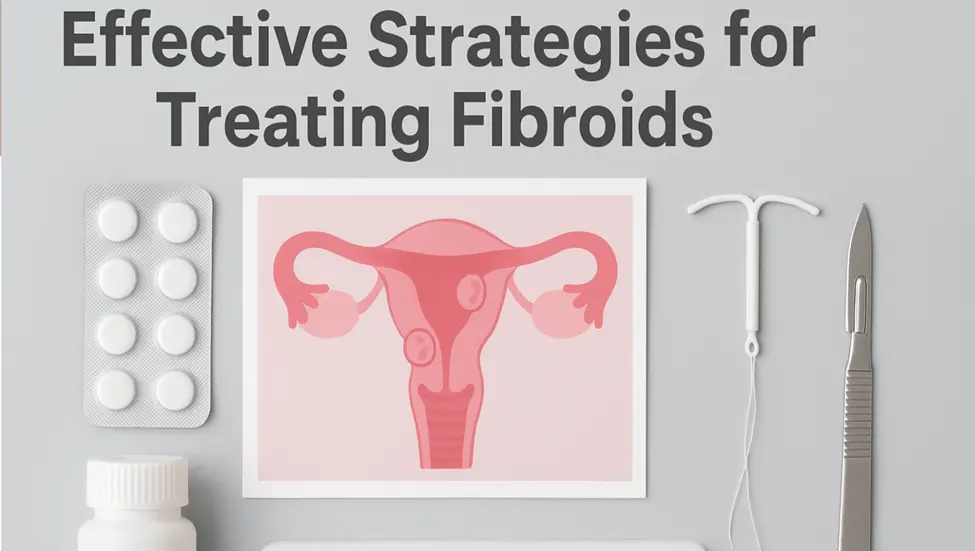
- Hormonal Birth Control: Medications, patches, or intrauterine devices (IUDs) may help lessen heavy menstrual bleeding.
- Gonadotropin-Releasing Hormone (GnRH) Agonists: These medications can temporarily reduce the size of fibroids by placing the ovaries in a dormant state.
- Tranexamic Acid: Decreases heavy menstrual bleeding while leaving hormone levels unchanged.
- Pain Relievers: Ibuprofen or naproxen can reduce cramping.
Survey (American College of Obstetricians, 2022): A total of 56% of women diagnosed with fibroids opt for medication as a preliminary treatment before exploring surgical options.
2. Non-Surgical Procedures: Where Science Meets Illusion
For women seeking relief from fibroids without undergoing surgery, contemporary medicine offers some innovative solutions.
- Uterine Artery Embolization (UAE)
- Small particles obstruct the blood supply to fibroids, causing them to shrink.
- Recovery time: typically 1 week.
- Added benefit: minimally invasive!
- MRI-Guided Focused Ultrasound Surgery (FUS)
- Intense sound waves target fibroids similarly to a laser in a video game.
- No need for incisions, outpatient care.
Survey (NIH, 2023): 82% of women experienced significant enhancements in their quality of life within 6 months post-UAE.
3. Surgical Choices: When It’s Time to Remove Fibroids
At times, fibroids become a persistent issue, making surgery the most effective solution.
- Myomectomy
- Eliminates fibroids while keeping the uterus intact.
- Best for those considering future pregnancies.
- Hysterectomy
- Involves the removal of the uterus (along with the fibroids).
- A permanent solution, which also means the end of menstruation
- Laparoscopy or Robotic Surgery
- Smaller incisions lead to quicker recovery and minimal scarring.
Survey (Journal of Gynecology, 2022): Patients who underwent myomectomy noted a 74% reduction in symptoms and improved chances of conception compared to those who opted out of surgery.
4. Natural and Supportive Methods: Gentle Aids
- Herbal Treatments (with a physician’s consent! )
- Green tea extract has shown potential for reducing fibroids.
- Vitex (also known as chasteberry) may assist in hormone regulation.
- Acupuncture
- Aids in alleviating pelvic discomfort and relieving overall stress.
- Vitamin D
- A deficiency is associated with the growth of fibroids. Supplements might offer benefits.
Survey (Women’s Health Alternative Therapies, 2023): 37% of women explored natural therapies, with many indicating less discomfort, though results can vary.

►Myths and Realities About Fibroids
- Myth: Fibroids are guaranteed to cause infertility.
Fact: Numerous women with fibroids achieve pregnancies and experience healthy births.
- Myth: Surgery is the sole remedy.
Fact: Adjustments in lifestyle and non-invasive treatments are also viable.
- Myth: Fibroids are malignant.
Fact: The vast majority of fibroids are non-cancerous.
►Conclusion: Your Uterus, Your Rules
While fibroids can be unwelcome, you are still in charge. Whether you decide on lifestyle changes, medication, natural treatments, or surgery, remember—you are in charge of your own treatment path.
Life is too precious to allow fibroids to dim your shine. So eat healthily, look into your options, and work with your doctor. With the right plan, you can say goodbye to heavy menstrual cycles, pelvic discomfort, and frequent trips to the restroom—and hello to a healthier, happier version of yourself.