 By

Your nutritional needs change gradually as you get older. From around 40, muscle mass starts to decline, metabolism slows a little, and the risk of conditions such as heart disease, type 2 diabetes and osteoporosis rises. The right foods won’t stop the clock, but they can help you stay strong, energetic and healthy for decades to come.
Why nutrition matters more after 40
- Muscle loss: without enough protein and strength training, adults gradually lose muscle, which affects strength, balance and metabolism.
- Bone health: bone density begins to decline, especially for women around menopause.
- Heart health: blood pressure and cholesterol often rise with age.
- Blood sugar: the risk of insulin resistance and type 2 diabetes increases.
- Energy needs: many people need slightly fewer calories, so each meal needs to be more nutrient-dense.
Foods to focus on
Protein at every meal
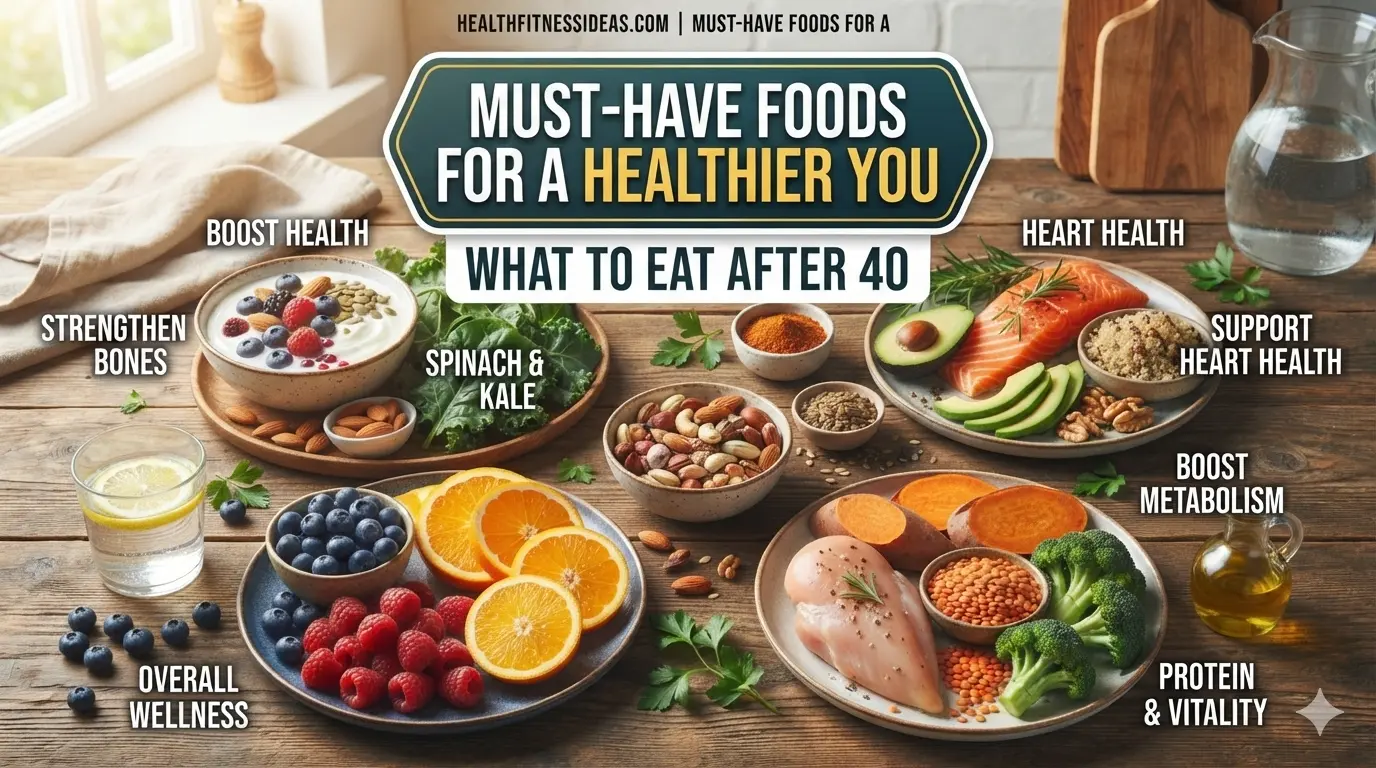
Eggs, fish, chicken, yoghurt, beans, lentils, tofu and nuts help maintain muscle. Spread protein across breakfast, lunch and dinner rather than eating most of it in one meal.
Oily fish
Salmon, mackerel and sardines provide omega-3 fats for heart and brain health, plus vitamin D. Aim for one portion of oily fish a week as part of two fish meals.
Calcium-rich foods
Milk, yoghurt, cheese, calcium-fortified plant milks, tofu set with calcium, and leafy greens support bone health.
Whole grains and fibre
Oats, brown rice, whole-wheat bread, millets and barley help with blood sugar, cholesterol and digestion. Most adults should aim for around 25–30 grams of fibre a day.
Vegetables and fruit
Aim for at least five portions a day, in a variety of colours, for vitamins, minerals and fibre.
Beans and lentils
An excellent source of protein, fibre, iron and folate, and a good replacement for some red and processed meat.
Nuts and seeds
Walnuts, almonds, chia and flaxseed provide healthy fats, protein and fibre. A small handful a day is a good portion.
Healthy fats
Use olive oil and other unsaturated oils instead of butter and ghee where possible.
Nutrients to check
- Vitamin D: many adults are low, especially with little sun exposure. Ask your doctor whether you need a supplement.
- Vitamin B12: absorption can decline with age, and vegetarians and vegans are at higher risk of deficiency.
- Iron: important for women before menopause. Too much iron isn’t recommended for men and postmenopausal women unless prescribed.
What to cut back on
- Added sugar and sugary drinks.
- Salt, which raises blood pressure.
- Processed and red meat.
- Highly processed snacks and fried foods.
- Alcohol.
Pair good food with good habits
- Do strength training at least twice a week to protect muscle and bone.
- Stay active every day.
- Sleep well.
- Get regular health checks for blood pressure, cholesterol and blood sugar. See the importance of regular health testing.
Bottom line
After 40, every meal counts a little more. Build your plate around protein, vegetables, whole grains and healthy fats, and you’ll give your body what it needs for the years ahead.
Disclaimer: This article is for general information only and is not medical advice. Always talk to a doctor or other qualified health professional before making changes to your diet, exercise, supplements or treatment, and seek urgent care in an emergency.