
 By
By 
►INTRODUCTION
Most people don’t give much thought to their belly button beyond the occasional lint discovery. But what if I told you that your navel could be a hidden doorway to your overall health? Yes, that small indentation (or protrusion if you’re an outie) can reveal a lot about your cleanliness, gut health, and even your immune system. According to recent surveys and studies, bacteria, cleanliness, and even odours in the belly button can indicate underlying health issues. So, let’s delve deep (literally and metaphorically) into the interesting and occasionally amusing world of belly button health.
►Belly Button Basics: More Than Just a Leftover Scar
Before we get into the nitty-gritty of navel hygiene, let’s understand what this body part actually is. Your belly button, or umbilicus, is the scar left behind from your umbilical cord after birth. But don’t be fooled—this tiny mark is more than just a biological souvenir.
Fun Facts About Belly Buttons:
- There are over 2,300 species of bacteria that can live in a single belly button (according to a study by North Carolina State University).
- Some belly buttons have bacteria that are completely unique to the individual—like a bacterial fingerprint.
- A study by North Carolina State University found that a single belly button can host over 2,300 bacteria species.
- Some belly buttons contain bacteria that are unique to each individual, similar to a bacterial fingerprint.
- Outies make up only approximately 10% of the population, whereas innies account for 90%.
- Omphaloliths (also known as “navel stones”) are a rare disorder caused by the accumulation of dead skin cells, oil, and debris over time.
► The Microbial Jungle: What Lives in Your Belly Button?
If you believed your navel was simply an empty spot, think again! A study published in the journal PLOS ONE discovered that belly buttons can support a robust ecology of bacteria, fungus, and yeast.
What Does Your Belly Button Microbiome Say About You?
- A diverse microbiome = Good immune health
- Excess yeast growth = Possible fungal infections or diabetes risk
- Strong or unpleasant odor = Potential hygiene issues or metabolic disorders
- Dry, flaky skin = Possible eczema or nutritional deficiencies
Real-Life Example:
One participant in the belly button study had a bacterium previously found only in Japanese soil, despite never having been to Japan! This just proves how unique and random our microbiomes can be.
►Belly Button Hygiene: Are You Cleaning the Correct Way?
A staggering 45% of people admit to never cleaning their abdominal button, according to a 2023 hygiene survey. And, guess what? That is a problem.
Signs that your belly button needs attention include persistent odour, itching or redness, oily or waxy residue, and discomfort when touched.
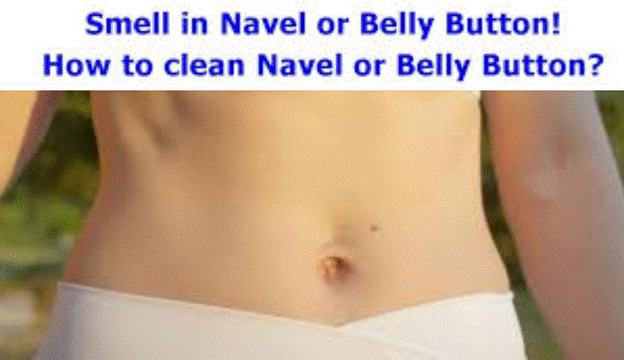
How to Properly Clean Your Belly Button
- Regarding Innies: To gently wipe inside, use a cotton swab bathed in warm, soapy water or rubbing alcohol.
- For Outies, use a delicate cloth to clean the surface with mild soap.
- Avoid Overcleaning: Excessive cleaning might deplete the skin’s beneficial microorganisms, causing discomfort.
► Belly Button and Gut Health: A Hidden Connection.
Your belly button and gut may appear to be worlds apart, yet research indicates that they have a microbial link.
Gut Health and Belly Button:
A healthy gut microbiota promotes skin homeostasis and reduces infections.
Toxins from poor digestion can leak through the skin, damaging the belly button area.
According to studies, people with gut dysbiosis (an imbalance of gut flora) are more prone to have skin problems around their navel.
►What Is Your Belly Button Odour Telling You?
We’ve all had that awful moment where we realise something smells wrong. If it’s your belly button, it could be sending you a message.
Common causes of navel odour include
- Poor hygiene,
- Bacterial overgrowth
- Fungal diseases
- Diabetes: Sweet-smelling discharge may indicate excessive blood sugar levels.
- Cysts or infections: A stinky, sore belly button may indicate a more serious condition.
How to Fix It:
✅ Use antibacterial soap
✅ Keep it dry
✅. Use tea tree oil for its inherent antimicrobial qualities.
✅. Wear breathable clothes.
Did you know?
In some cultures, people apply coconut oil or herbal pastes to their belly buttons, believing that it helps digestion, soothes menstrual cramps, and even boosts skin health.
►Belly Button Piercings: Stylish or Risky?
Belly button piercings have been a fashion statement for decades, but they can come with risks.
Common Belly Button Piercing Issues:
- Infections (20% of piercings develop some infection)
- Allergic reactions (especially to cheap metals)
- Migration or rejection (your body might push the piercing out over time)
- Keloids or scars (especially for those with sensitive skin)
To keep a piercing healthy:
- Clean it everyday with saline solution.
- Avoid wearing tight garments that will rub against it.
- Never twist or mess with it while healing.
- Look for indications of infection (redness, swelling, and pus).
A woman once set a Guinness World Record for having the most belly button piercings, with 9,000 needles put simultaneously!
►Conclusion: Love Your Belly Button; It Will Love You Back!
Who knew such a small area of our bodies could convey so much about our overall health? Whether it’s microbiomes, intestinal health, cleanliness practices, or piercing hazards, your belly button deserves some extra attention.
Key Takeaways:
✔ Your belly button contains thousands of germs, both beneficial and harmful.
✔ Proper cleanliness prevents illnesses, odours, and discomfort.
✔ Gut and belly button health are more linked than you realise.
✔ Unusual smells or discharge may suggest an underlying problem.
✔ Take excellent care of your piercing to avoid issues.
So, the next time you’re in the shower, take a moment to admire your belly button. It could be merely trying to tell you something!